A historian is an academic who studies and analyses objectively events from the past.
Historians study, research and write about events, ideas and people of the past.
They place events in context and often try to relate knowledge of the past to contemporary situations or problems.
History is a very broad field, and historians need general knowledge, but they usually specialise in a period, a country or a field such as:
- Economic history
- Social history
- Art history
- History of education
- History of science and technology
- Military history
- Political history
- History of ideas, literature, and philosophy
For example, a historian may work on gender history with a more specific focus on the role of women in 19th century British society.
Historians gather all the information they can about their subject by researching archival and original material.
They rely mostly on written records such as newspapers, census records, maps, city directories, drawings, diaries, photographs, letters, etc.
They also study audio and video sources and objects from the past (garments, tools, weapons, coinage etc)
They often visit archives, administrative offices and the places which they are studying.
For example they look into government or church records and interview people who may offer an insight into the place or person they are studying.
After data collection, historians analyse the information, sometimes using statistical methods.
They work in a thorough and systematic manner to ensure that they present objective facts and arguments.
They compile their findings in books or articles and present them in lectures and conferences.
In terms of career prospects, a large majority of historians combine teaching, writing and research at colleges and universities.
You can also work as consultant in various domains:
- Media: you can edit books for a publishing company or be employed as a consultant for radio, TV and film producers.
You check that the production provides an accurate depiction of past events, styles and people. - Museums and archives: you can be a consultant and a tour guide.
- Lawyers, politicians, doctors: these professionals may need you to research and write up their company’s history, develop content for exhibitions or conduct specialised historical research.
- Government agencies: you can be a consultant for the departments involved in the preservation of historic buildings.
- Individuals: you may work for people who want to know more about their family or house history.
Networking is a key part of a historian’s career, mainly through conference organisation and attendance.
Conferences often lead to publishing opportunities using essays from the speakers.
Historians also aim to become Fellows in prestigious associations such as the Royal Historical Society or The Historical Association, which provide important networking opportunities.
Salary
Post-doctoral teaching positions, which last from 1 to 3 years, have relatively low salaries ranging from £14,000 to £30,000 per year.
The starting salary for a history lecturer ranges between £25,000 and £42,000.
There is a major difference in salary between lecturers (known by the title of Dr) and Professors.
Professors are often paid between £80,000 and £100,000 per year.
Responsibilities
- Conduct research using different methods, including extensive reading and visits to places studied
- Assess, analyse and order gathered material
- Construct an argument and present it in a clear and persuasive manner
- Edit and write scholarly articles, chapters and entire books
- Attend and organise conferences
- Be a speaker at lectures, talks and conferences
- Write funding applications
- Sign up for mailing lists that provide information about key upcoming events
- Become a member of historical associations
- Prepare teaching materials
- Supervise history students
Qualifications
The basic qualification for a professional historian is a postgraduate degree in history.
With an MA in history, you can become a teacher and researcher or enter a field of work related to history, such as archive or museum work.
You should take courses in the language and literature of the area and period in which you plan to specialise.
Career advancement will only be possible if you have a PhD from a leading university.
Skills
- Excellent written and oral communication skills
- Excellent ability to analyse and synthesise findings
- Logical, thorough and systematic approach
- Objective thinking and critical reasoning
- Intellectual rigour and independence
- Self-motivation
- Curious, creative and open mind
- Ability to work without direct supervision
- Time management skills
- Ability to lead group discussions and moderate ideas in groups
Working Conditions
Often, universities only offer part-time lecturing positions and newly qualified historians are hired for short contracts (1 to 3 years).
This can lead to a precarious existence for historians at the start of their career.
As a result, you are likely to ask for funding for your research.
You will need to submit applications to institutions such as The Leverhulme Trust, the British Council, the Andrew W. Mellon Foundation or the Arts and Humanities Research Council.
Many historians combine the roles of lecturer, writer and consultant so they may work long hours.
They often have to travel to attend talks and conferences during evenings and weekends.
Experience
In the academic world, history is a highly competitive field, often with 300 applicants for one job.
You will need an outstanding PhD from a reputable university to obtain a lecturing position and
at least one book publication.
Usually, PhD candidates publish their dissertation as a book with a reputable academic publisher.
You also need to prove that you have some teaching experience in a university.
Employers
Historians are usually employed in public bodies: colleges, universities, archives, museums, government agencies.
They also work as freelance writers and consultants for private companies.
Career Progression
In the academic world, you will need to demonstrate skills both in teaching and research and get published regularly in order to gain recognition from your peers and be promoted from lecturer to Professor.
Image

Also known as…
- Historical Researcher
- Historical Consultant
Related Jobs
- Archaeologist
- Archivist
- Genealogist
- Librarian
- Museum Conservator
- Tour Guide
What’s it really like?
John Sadler, 58, has been a military historian for 25 years.
Prior to this, he was a lawyer but he left this job as soon as he could to fulfil his passion for history.
He has a first degree in law, and later got an MPhil in history.
His objective was always to become a historian and a writer.
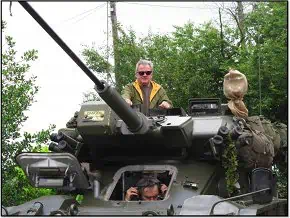
He now divides his time between teaching, writing, guiding tours and organising historical reconstructions.
John lectures part time in the Adult Education department of Newcastle University.
He also researches and writes about military history and organises battlefield tours in the UK and Europe.
He used to take his own students on tours and soon started to work for heritage and history tour companies such as Anglia Tours, Leger, Lindum Heritage and Galina.
To date, John has written 24 military history books.
He comes up with ideas and synopses which are forwarded to publishers by his agent and waits to hear if the publisher wants to commission him to write on the suggested subject.
He has worked with diverse publishers including The History Press, Pen and Sword and Pearson Longman.
He is a specialist in both World Wars but also has a niche interest in the Anglo-Scottish border wars (14th-16th centuries).
This interest was stimulated by the fact that he lives in the heart of the historic Anglo-Scottish Borderland; he finds that his in-depth knowledge of the physical area he studies gives him a great advantage.
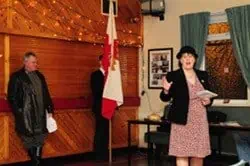
John also works with the outreach department of the university: he brings history to disadvantaged communities through historical interpretation and dramatisation.
History is used as a tool for rehabilitation for challenged groups such as asylum seekers and recovering drug addicts.
Activities are very hands-on and include dressing up in uniforms, demonstrating weapon handling, cooking medieval meals and experiencing life in a trench during World War One.
John is also a radio and TV consultant.
Finally, he carries out research for individuals who want to know more about their family history, for example about a relative who died during World War One.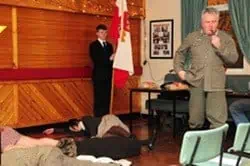
John enjoys his work immensely as he is able to follow his passion.
The work gives him freedom and flexibility and he doesn’t have to report to anyone.
He enjoys the fact that he can learn about ways of living in the past through interpretation and re-enactment.
He finds his community work very fulfilling and loves to be both a lecturer and a performer.
The only slight drawback of the job is that it is not very well paid and that he has to travel a lot.
Here is his advice to people thinking about starting a career as a historian: if this is your passion, follow it!
You need a good degree; go as far as you can. It is now almost compulsory to have a doctorate.
Competition is intense, so try to develop a specialism and get published, so that your name is out there and you get asked to work as a regular consultant for radio and TV programmes.
John’s ambition is to travel to far-flung battlefields outside Europe e.g. in Russia, Africa and Burma.
He would like to use his knowledge of history to help developing countries combat present problems such as the training of child soldiers in Africa.
He would like to spend more time consulting for TV programmes, and if possible run a national TV series.
Finally, he also wants to publish a huge bestseller!
John charges £35 an hour for carrying out historical research.