Jewellers cover a range of jobs which all surround the design and production of jewellery, ranging from merely designing the pieces to moulding specialist materials.
The key job of a jeweller is producing designs of various types of jewellery, either by hand or using a computer programme.
Typically these are types of fashion jewellery, but can also include pieces that use more specialist material including gold, silver and precious stones.
If they are working freelance the jeweller will usually be responsible for their own production, which requires a number of processes that call for training.
However, if they are working for a company the jewellery will usually be made en masse by a production team using specialist equipment.
Salary
The starting salary for graduates is usually around £12,000 to £15,000 in a salaried position, but this can vary greatly for those who are working freelance.
As a designer becomes more experienced and their name becomes more widely known, their salary will increase in accordance with this, with the highest wage falling around £30,000 or slightly above.
Salaried positions are not that common and so most jewellers will work on a freelance basis.
For this they are likely to charge by the hour, typically £30.
For a jeweller to increase their wage they need to promote their company or name actively and skillfully, which is a large part of the job.
There are a limited number of jewellers who make it to “designer” status and they can obviously charge a much higher rate than the £30.
Responsibilities
- Designing – this is the chief job of a jeweller, giving them the opportunity to produce original designs. Although designs may initially be done by hand, computer-aided design is now widely used and these packages present finished pieces to customers or manufacturers.
- Stone-setting – many pieces of jewellery will have intricate designs and setting stones in place can often be a long and arduous task. It needs to be completed with the utmost care, and requires great attention to detail.
- Welding – jewellery pieces are regularly made from more than one type of material which need to be welded together. This is a specialist process that requires training.
- Enamelling – to ensure that a piece of jewellery does not chip, and to give it added protection, it will usually be enamelled. This is a specialist process whereby powdered glass is fused to a metal by heating it in a kiln. This process is also used to make patterns and apply colours to a piece of work, and like many of the other skills it requires training.
- Electro-plating – when precious metals need to be fixed in place on a metal structure electro-plating is required. Again this can be a very intricate job thus requiring a steady hand and attention to detail.
- Chasing – chasing produces raised patterns on the surface of the metal.
- Polishing – work will need to be polished before it can be sold to ensure that it is of the best quality appearance.
- Engraving – some people will want their piece of jewellery engraved, which is a job for the jeweller. This will not always be for pieces that have been produced by the jeweller, but most jewellers offer this additional service within their shops.
- Model-making – making a model of a design means that the same piece of jewellery can be produced many times. The mould can be made from a variety of different materials, including plaster, wax or metal depending on the type of jewellery it will make. This is especially important for jewellers who are working for large companies that are going to produce mass quantities of the same item. This mould will then be used by the production team.
- If the jeweller is running their own business they will also have to take care of all monetary issues. There are a great deal of promotional duties that go with freelance work; the jeweller has to make sure that their name and work is known in order to sell more. This can include designing a website and constantly sending out information to major suppliers and independent jewellery shops, constituting one of the most important and vital aspects of a freelance jeweller’s job.
Qualifications
Although a degree or HND is not essential for this type of work, a higher standard of education is preferred for salaried jobs.
These qualifications will greatly aid those who wish to work freelance as they include modules about jewellery production and degree shows can lead to future offers of work.
These courses provide essential details about the trade, not just skills but information about how to make it as a jeweller.
Qualifications and degrees in the following subjects are especially useful: –
- Jewellery design and production
- 3-D design
- fine art or visual art
- graphic design
- illustration
Skills
- Creative thinking – this appears to be an obvious skill for jewellery design but it is not enough just to have the ideas. These ideas also need to be communicated and produced.
- An eye for detail and being able to produce intricate work is key. Many pieces may be small and elaborate and this can be time consuming work. A great deal of patience is therefore vital and good hand-eye coordination is essential also.
- Great passion and commitment is required to be a jeweller; it is not a greatly paid job and is extremely hard work. You must make sure that you are willing to work long hours and show dedication to this career before embarking on it.
- Some specialist knowledge is necessary for this career, but this is taught through formal qualifications.
- Great organisational skills are needed, so that pieces are produced on time to their deadline. These skills are especially important for freelance workers who will need to manage their own business.
Working Conditions
For employed jewellers hours are usually regular, for example 9 to 5, without any shift work.
However, for those that are self-employed hours will usually fluctuate due to demand; some weeks only 15 hours will be worked whereas in busier weeks up to 50 or 60 hours may need to be worked due to production requirements.
As jewellers usually work on their own they cannot offload their work to other jewellers in times of great demand.
The great bonus of freelance work is that time off can be taken whenever wanted, but it does mean that a regular income is not guaranteed which can be especially troublesome for those just starting out.
In these cases the jeweller may also need to work at a part-time job.
If a jeweller owns their own shop then obviously standard shop hours will be worked, but evenings and weekends will often be occupied with making the jewellery unless a shop assistant is employed to work in the shop instead.
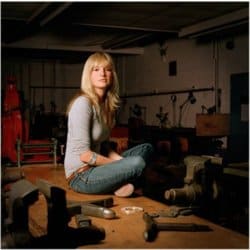
The work is usually carried out in a workshop.
This can be noisy and busy in salaried positions when many jewellers and production staff are employed in the same space.
However, freelance work is much lonelier, with these jewellers having a workshop in their house and working in solitude.
For freelance jewellers it is greatly beneficial to have your workshop in urban areas as people will often need to come to you to see your work, or you will need to be able to get to major cities easily in order to exhibit your work.
Freelance designers will often travel to art and craft fairs or markets to sell their produce.
These are usually held at the weekend and involve long hours.
The major health and safety factors include using a kiln, welding and ensuring that tools are used in a safe manner.
Many of these processes require training, which will be included in the qualifications.
Experience
The best way to practise your own style is to keep producing numerous designs in your own time.
Working in a jeweller’s shop will also teach you various specialist processes, such as engraving, and will teach you how to run a shop.
The owner of the shop may also be able to provide you with some essential contacts, or if you prove to be a great asset to them they may agree to exhibit some of your work in their shop.
Employers
Many jewellery designers will work freelance.
Companies that produce jewellery, for example major clothing shops, will need designers to work for them.
There is limited production work involved in this.
There are some major jewellers operating in the UK which need specialist jewellers.
These include: –
They may require jewellers who are trained in using special types of material.
Career Progression
The only career progression available to freelance jewellers is going on to run their own business, which takes a lot of effort and hard work and is not always stable.
Those who are working for a major company may start in the production team and go on to become a junior designer, hopefully progressing to a senior designer.
Image
Also known as…
- Retail jeweller
- Designer
Related Jobs
What’s it really like?
Jennie Darbyshire has recently entered the Jewellery designing world, but is already off to a great start which has lead to ambitions for her future career….
I always had an interest in the area of art and design; whilst in school, art and design lessons made me realise that this hands on trade was the direction in which I wanted to focus the rest of my education.
At college, alongside photography, I took an all round art and design national diploma instead of A Levels.
This gave me a taster of all the different sections of the art world.
In the second year of this two year course I specialised in ‘design craft’, dropped photography, and was offered the chance to take up an extra City and Guilds qualification in either dance or jewellery making.
I obviously chose the jewellery option and focused my second year national diploma work on the skills I learnt through that.
I absolutely loved this course, and it opened my eyes to educating myself further in the field.
I looked into a few different university courses round the country and at first decided to do glass, ceramics and metal work, before changing my mind and deciding to completely specialise in the subject and go to Rochester in Kent to do Silversmithing, Goldsmithing and Jewellery Design.
This was definitely the right decision as it turned out to be a fantastic course and I made some strong contacts within the industry.
At the end of my second year and all through my final degree year I got myself work experience one day a week with a jeweller called Jesper Velling in Tunbridge Wells.
He is an amazing jeweller who has won a few Gold awards at the prestigious Goldsmiths competitions, so it was really useful to work with him in his workshop.
He offered me a job when I finished but unfortunately I could not accept it at the time.
I did not do any of my own private commissions while studying but did enter lots of competitions and exhibited at a few shows.
My next big exhibition will be the IJL (International Jewellery London).
In the future I would eventually like to have my own gallery and workshop and be a self-employed designer maker, who is someone that not only designs but also produces their own jewellery.
I needed to have more experience in this area before jumping straight in so since finishing my degree I have applied to a couple of jobs for workshop positions and have just accepted one for a self employed designer maker called Annette Gabaddey.
It is a gallery and workshop all on one site so when customers are in the gallery they will be able to see me working also.
This should provide me with enough experience to learn how to set myself up in the same way.