Trading Standards Officers (“TSOs”) are responsible for monitoring and ensuring that traders meet legislative requirements. Their role is to protect UK consumers and ensure that items sold are fit for purpose and in line with legislation such as the Fair Trading Act, Prices Act, Trade Descriptions Act, Consumer Protection Act and Weights and Measures Act.
A list of applicable legislation is available here.
TSOs are, in the majority of cases, employed in the public sector. They are responsible for protecting consumers and businesses from illicit business and trading practices. The role can be split into three broad categories:
Investigative – As a TSO you will be expected to liaise with consumers, businesses and the public to identify suspect practices and investigate whether such practices are an infringement of relative legislation. This will involve visiting premises, examining goods or experiencing services to see whether a product meets legislative requirements.
Enforcement – If a practice appears to be in contravention of relevant legislation you will be expected to create a case file with supporting evidence. There is a pre-agreed enforcement protocol that a TSO should meet. For a minor infringement an informal warning will suffice. For more serious issues, as a minimum, you will be expected to advise a business in writing of the nature of the infringement and what action is necessary to resolve the issue. In certain cases a formal caution may need to be issued to a business which can result in prosecution, fines or civil or criminal conviction. In such cases the TSO will be expected to provide evidence and serve as a witness in any legal proceedings.
Education – TSOs are, first and foremost, expected to educate and advise consumers of both their rights and appropriate practice.
The work is likely to vary by location. TSOs are expected to work closely with other enforcement departments, Her Majesty’s Revenue and Customs (“HMRC”), police and local authorities.
Salary
Starting salaries will normally be between £24,000 and £34,000 although the area you work in will affect this. With experience salaries are likely to increase and it may be possible to move into supervisory or management positions. Salaries for supervisors are likely to be £35,000+ but will vary by region, role and the size of the team.
There is also likely to be a defined benefit pension scheme available to all TSOs working as local government employees as well as life assurance and income protection benefits. There is a pre-prescribed expenses and mileage allowance available.
UNISON is the main trade union for local government authorities and is active in petitioning for pay increases.
Responsibilities

The work is likely to vary, and you will meet a lot of different people. You should expect to undertake the following roles:
- visiting premises
- carrying out routine inspections including collating evidence and taking samples as necessary
- investigating complaints from consumers
- ensuring compliance with legislation and making sure that a business is meeting legislative trading standards. This will involve identifying unsafe practices or faulty goods
- checking products for defects, checking that weighing machines are correctly calibrated and that beer and spirit measures are correct
- investigating advertising campaigns that are deemed misleading
- advising on technical and legal issues
- working with other professionals such as scientists, laboratories and lawyers
- collecting evidence and building case files including maintaining a database of inspections and actions outstanding
- presenting information in court or other public enquiries. This may involve giving evidence or providing records for legal proceedings
- keeping meticulous records of visits and actions undertaken
Qualifications
There is a series of accredited qualifications required in order to practise as a TSO. In order to get into an appropriate course you will likely need 5 A-Cs at GCSE and a B or higher in mathematics.
There are two common routes to qualifying – on the job and via degree:
On the Job
It is possible to apply for a position with a local council and aim to study alongside your employment. You must complete all of the qualifications below before you can practise as a TSO. The qualifications are accredited by the Trading Standards Institute and form part of the Trading Standards Qualifications Framework (“TSQF”). The qualifications, from lowest to highest are:
- Foundation Certificate in Consumer Affairs & Trading Standards
- Module Certificate in Consumer Affairs & Trading Standards
- Diploma in Consumer Affairs & Trading Standards (“DCATS”)
- Higher Diploma in Consumer Affairs & Trading Standards (“HDCATS”)

Via Degree
It is also possible to study for a TSI accredited degree. These are currently offered by the following institutions but it is worth consulting with the University College Admissions Service (“UCAS”) website for details of other courses:
- Manchester Metropolitan University
- Manchester Metropolitan University Graduate Diploma
- University of Wales Institute, Cardiff
- University of Teesside
- Queen Margaret’s University College, Edinburgh
- South West Regional Assembly
- Nottingham Trent University
- University of Wolverhampton
Certain degree subjects such as law also give you TSI approved exemptions.
More information on the range of qualifications is available here.
Skills
- You will need to be calm with the ability to work in potentially high-stress environments. For example you may have to advise and create a case for prosecution.
- Communication skills are paramount.
- Investigative skills
- Technical skills, and knowledge of appropriate legislation, as mentioned in the Qualifications section above.
- You will be expected to work efficiently with other professionals but TSOs are largely responsible for building and maintaining their own inspection records. You will therefore need to be self-motivated and well organised.
- In some industries you might have to use ladders or go on scaffolding, into roof spaces or work in factories or in outdoor conditions; an unfit person is therefore likely to struggle in these environments but not if you are office bound.
- You need to be able to think on your feet at times to try and resolve dangerous situations.
Working Conditions
Standard office hours tend to apply (35-39 hours a week) but you may have to work evenings or weekends if on call. You will normally work in an office environment but a considerable amount of time will be spent on inspection and visiting workplaces.
The work tends to be diverse by nature but there may be instances in which you are working with confrontational people and in high stress environments. This will be particularly true when enforcing legislation.
Experience
While you won’t be expected to have prior experience for entry roles relevant work experience can prove useful.
Employers
Local Government – Councils and local government offices are major employers.
Private Sector – most major retail chains will employ a TSO. There are also consultancies offering advice to businesses.
Career Progression
There is a clear hierarchical structure in most local authorities and it is possible to be promoted to a senior, principal or chief officer position.
There is also a wide range of associated bodies within the public sector such as the Law Society, Courts Service, Police, the Intellectual Property Office, the Federation Against Copyright Theft and the Mechanical-Copyright Protection Society. Each agency will have very specific requirements and skill sets but moving between them is possible.
Most large companies will also have internal TSOs to make sure that they meet compliance standards applied by local government inspectors. Pay in the private sector can be considerably higher.
Also known as…
- Trading Standards Enforcement Officer
- Consumer Protection Adviser
Related Jobs
What’s it really like?
How long have you been in this particular job / industry?
I’ve been working as a Trading Standards Officer for Worcestershire County Council for 8 years.
What did you do before this job?
I joined the Trading Standards Service as an Administrative Assistant straight after leaving school and I have worked my way up through the various departments within it. I took three years out to study for a BSc in Consumer and Trading Standards at University and then rejoined the Service in the Compliance and Investigation team as an Enforcement Officer. After another year and a half or so, I completed the Diploma in Trading Standards and am now qualified as a Trading Standards Officer.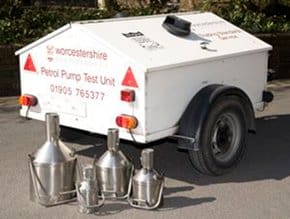
What do you do in a typical day at work?
A typical day doesn’t really exist with this job. Trading Standards as a whole enforces over 80 Acts of Parliament and hundreds of regulations and orders.
There are five sections within the Service: Strategy and Support, Advice and Education, Home Authority Services, Animal Health and Welfare and Compliance and Investigation. I work in the Compliance and Investigation team which is responsible for a wide range of enforcement activities. We conduct inspections at retail premises throughout the county, checking pricing, food safety, weights and measures, product safety and fair trading matters such as counterfeiting. We also have a large role to play in the pursuit of rogue traders, which includes our rapid response programme in conjunction with the Police.
The work that we do is very much intelligence led; we take complaints from consumers as well as from other Trading Standards Authorities and agencies such as the Police, and Her Majesty’s Revenue and Customs. We regularly monitor the internet for goods and services being sold via websites and online auction sites and car boot sales for any goods infringing the laws that we enforce. We also conduct frequent operations within licensed premises to prevent the sale of alcohol to underage persons.
What do you like about the job?
Monday you can spend the day filling out paperwork and speaking to consumers from your desk, Tuesday you could be taking part in a dawn raid or conducting surveillance operations, Wednesday could be a training course from a top Barrister, Thursday might involve an emergency call from a vulnerable person being threatened by cowboy builders and Friday night may be spent food sampling in a curry house. No two days are the same with the job that I do – and that is why I do it.
What do you dislike about the job?
The necessary evil of paperwork and red tape is a pain, but it comes with the territory. My main dislike is that it can be frustrating when we can’t help everyone. From time to time we have to deal with issues that are beyond our control. Even though we know that an offence has been committed, sometimes there may not be enough evidence to pursue a case against the person who committed it.
What advice would you give to someone thinking of doing this job?
Do it because you enjoy it. The money isn’t amazing and varies from place to place. A Trading Standards Officer starts around £25k and there is a lot of training involved to get to that level. Be prepared for some people to dislike what you do – Trading Standards are often seen as the bad guys and tough skin is required from time to time. But don’t let that put you off! The job can be very rewarding and there are many other positions that you could apply for within Trading Standards that don’t require as many qualifications.
What job(s) do you think you might do after this role (i.e. career progression)?
There are a lot of avenues you can go down from Trading Standards. Working in other enforcement areas in the Public Sector is one option. Most of the main retail chains have a Trading Standards Officer to advise them. Other agencies like the Law Society, Courts Service, Police, the Intellectual Property Office, the Federation Against Copyright Theft and the Mechanical-Copyright Protection Society are all closely linked but most will require re-training as this job is quite specific. At the moment I haven’t really thought about where I would like to go next, but there are lots of options to consider.
What other inside-information can you give to help people considering this career?
Jobs are few and far between within Trading Standards at the moment – as with many sectors. A lot of the positions require at least a basic knowledge of civil and criminal law and some will require professional qualifications, many of which are attained through on the job training. Try to go for a learning route that is broad – with a legal, consumer or business basis and get some experience with your local Trading Standards Service; most are open to allowing you some work experience.