A web developer develops websites to fulfil the specific needs of his or her employer or clients.
A web developer’s role is to fulfil the on-line requirements of their employer or client.
This could involve building a website from scratch, or adding to or adapting an existing site.
The developer’s responsibility might encompass everything from designing the site, building it, testing it and fixing glitches to the everyday maintenance of the site once it is ‘live’.
On the other hand, the developer may be part of a team and be responsible for only one element of a larger project.
In recent years, the need to have a strong, on-line presence has become increasingly important for public and private organisations and businesses of all kinds.
For many, a good website plays an essential role as the public ‘face’ of their organisation and an important point of contact with customers or members of the public.
This, coupled with the phenomenal growth of internet shopping has driven the need for skilled, web developers.
There are many opportunities in this expanding field.
A developer could work for an agency that specialises in offering multimedia solutions for clients or he or she could be employed in-house for any of the numerous organisations that run websites.
Usually, the developer will work in his or her employer’s office, but occasionally, an employer will allow the developer to work from home at least part of the time.
Many developers work freelance on short-term contracts, either from home or on site.
Web-development, like other areas of the IT industry, tends to be male-dominated but increasingly women are making their presence felt in this area.
There is a lot of technical hardware and software used in this job.
The basics include a computer with graphics and sound cards, monitor, keyboard, mouse, speakers, modem and telephone line with broadband connection.
Additionally, a developer might need to use video recording equipment and a printer
A developer would also need various software packages, including web-browser software, a web-developing package such as Dreamweaver, used in the design, construction and maintenance of the site, anti-virus software, database/server development software, software for creating and reading PDF documents, software for creating and editing graphics, video and photography, internet security software as well as other tools and applications as necessary.
Salary
The salary of a web developer can vary enormously, depending on the location and nature of the job, and the experience and qualifications of the developer.
Typically, an entry-level position might offer £15,000 pa (more in London), but with a few years’ experience, this can rise dramatically to around £30-40,000.
Senior developers, particularly those that combine developing with project management, can earn in excess of £60,000 pa.
Responsibilities
The responsibilities of a web developer depend on the needs of his or her employer or client.
A developer working for more than one client will often find that their everyday tasks will vary from project to project.
Some developers specialise in specific areas of web development, but most are required to have general, all-round abilities.
Typical tasks of a website developer could include:
- Liaising with the employer or client to discuss the project requirements and desired outcome
- Working on the design of a website/webpage, in conjunction with a web designer
- Constructing the website/webpage, including layout, text, adding video, image and graphics and command buttons. The developer could be asked to create interactive functions that allow users to shop online or give feedback.
- Linking the website to existing client servers or databases. Additionally, the web developer might be involved in liaison with the website hosting provider.
- Making sure the website is secure.
- Testing the website before it goes live to make sure it fulfils all the requirements in the brief, is attractive and user-friendly. The developer would then fix any bugs and make adjustments as necessary.
- Maintaining the website. This could include regularly updating the site, fixing broken links or applications and amending mistakes.
- Putting in measures to increase traffic (the number of visitors) to the website.
Qualifications and Experience
There are many courses offered at further education colleges and universities in subjects related to web development or IT in general.
Most employers are looking for graduates with an IT background as basic knowledge of IT concepts such as programming and networking are key to web development.
However, some are willing to take on applicants who have no formal IT training but are experienced.
Many web developers are self-taught, picking up the necessary skills by building their own websites or working on sites for others on a voluntary basis.
Evidence of previous web developing experience, such as a portfolio on CD or DVD, would be very useful when applying for jobs.
Skills
The key skills and abilities a good web developer should have include:
- Excellent technical skills and knowledge, including being able to use one or more scripting and programming languages, web development packages and other software used in web design and development. It is possible to build a basic website using a ready-made package without the need for programming skills. However, these skills are essential for developing the new generation of websites, such as those that allow users to personalise their ‘homepage’, which are much more sophisticated. Common languages include HTML, JavaScript, PHP, Perl, ASP and Java. Common web development packages include Dreamweaver, Creative Suite, Adobe GoLive and Hotmetal Pro.
- A creative flair for design.
- The ability to work under pressure to deadlines.
- Good problem-solving skills.
- Excellent communication skills – with both clients and other web professionals.
- The ability and willingness to learn on the job and keep up-to-date with the constantly changing face of technology.
Working Conditions
The hours a web developer works varies depending on the volume of work.
Normally, a developer will work from Monday to Friday, 9am to 5pm, but these hours can increase dramatically just before deadlines or on particularly large projects.
The job is not generally physically demanding, but a developer is often required to spend several hours working on a computer, which could cause backache, repetitive-strain injury, or visual problems.
Employers
There are no typical employers of web developers.
Many large businesses and organisations across all sectors have departments devoted to creating and maintaining their websites.
There are also many agencies offering interactive media solutions to clients.
Other major employers of web developers tend to be new media companies, such as marketing and adware (online advertising) agencies, news websites and search engines, which need to create, update and maintain web pages continuously.
Leading names in web development and interactive marketing include:
- LBi – a global digital marketing agency employing 360 people in the UK alone.
- Sapient – a US-based firm offering interactive marketing strategies and consultancy, with offices in the US, Canada, Europe and India.
- Conchango – a London-based interactive design and build agency employing 285 people.
- Amaze – an agency offering online solutions and consultancy, employing 150 people in the UK.
Career Progression
Applicants for web developing jobs often have experience in a related field, such as web design or programming.
With experience and training, a web developer can go on to specialise in a particular area of development, become a project manager or team leader or even become technical director.
There are also opportunities to go freelance, become a consultant, or set up a web solutions agency.
Also known as…
- Website Developer
- Interactive Media Developer
Related Jobs
What’s it really like?
Ricardo Carvalho, 28, is a web developer and designer, graphic designer and artist who has co-founded the creative agency factory house.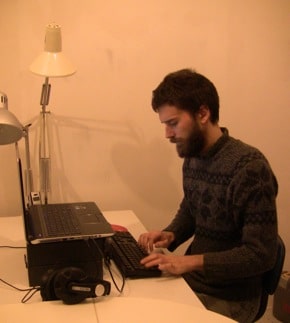
How long have you been in this particular job?
I have been experimenting with code since 2004 but began working seriously as a web developer in 2008.
What did you do before this job?
I was studying fine arts in Cambridge and working at the local arts cinema.
Then I did an MFA Computational Arts at Goldsmiths College while doing some web design and development.
How did you end up doing this job?
I first started playing around with ActionScript to produce interactive animations and videos.
Then I wanted to showcase some of my work online, so I taught myself how to develop websites.
From early on, I saw that static, or in other words “hard-coded”, website pages were not very efficient when dealing with a lot of content that needed to be updated.
Soon after, I developed an obsession with organising and displaying information dynamically.
What academic qualifications do you have?
I have a BA (Hons) Fine Arts and an MFA Computational Studio Arts.
Do you think that school prepared you for the way the work gets done in the real world?
Partly, yes.
I had some workshops in Javascript but I never did a complete web development course.
My processes, both in developing and communicating with clients or collaborators, matured solely through trial and error.
I didn’t go through any “incubator” stage and I fight hard for each of my clients.
Paradoxically, school helped me how to learn without the need to rely on someone else – like a teacher – to guide me through.
This autonomy is only possible if you have a strong self-discipline and a well-organised methodology when working or researching.
This is something that school didn’t directly teach me but instead challenged me with, especially during my postgraduate years.
This skill is essential when developing websites, as you constantly need to create and implement new things to adapt to changing trends.
What do you do in a typical working day?
Before I start working I need a coffee, otherwise the day doesn’t actually start…!
We have a large and light room dedicated to our work within our house so there is no time wasted commuting.
Often, but not always, I put some minimalist electronic or classical music on, and the working day begins.
Besides the more routine tasks of actually programming and troubleshooting, a lot of time is invested doing online research, as well as communicating with clients through emails, video conferences or in person.
It takes a lot of time to organise things as I constantly find myself multitasking, doing roughly a dozen things at once.
For this reason, I use a smart little programme to log my hours and note exactly what tasks were done and which are still left to do.
What are the most important qualities an applicant must and should possess?
A web developer should be extremely well organised with their work material and processes.
They should always know what their code does and means, even though at times copying and pasting code from someone else is the most adequate solution for specific situations.
More importantly, you need to understand the greater picture of the code being produced and the various implications it might have when implemented.
For example, web developers face the continuous challenge of producing cross-browser and cross-device compatible code.
It is not important to know certain code functions by heart; what is more important is to know how to get what you want to work efficiently, and work well with everything else in a timely fashion.
It is important that an applicant not only knows how, but loves to think in abstract terms and deal with complex relationships.
This is because that is what they will be doing most of the day.
Knowing the deeper meaning of code and how the web really works is what will make you a good programmer.
Memorising like a parrot won’t take you far, as web standards rapidly change and new devices are produced every day.
What do you like about the job?
There are extremely satisfying moments in all stages of the work.
I love planning the structure and process of the site.
I love thinking of the right method to develop a site with specific needs.
Sharing ideas and brainstorming with clients is usually very exciting.
It is also such a great sensation when you look at the end result and you see something powerful, dynamic and above all autonomous.
What do you dislike about the job?
At times it can become very stressful, especially when you are too close to deadlines and you still encounter big problems.
What advice would you give to someone thinking of doing this job?
I know this is a given to many of you but you can sometimes spend awfully long periods of time sitting in front of the computer and this is simply not healthy.
It is a pity that no aspects of this work require you to move much.
It is extremely important to schedule a lot of physical exercise during the week – you will see that your work will be better too.
If you left this position, what else would you consider or enjoy doing?
Many things.
But I would probably do something some hands-on, physical.
Carpentry for instance.
Do you mind us publishing your salary / rate per hour – this is very helpful for job seekers?
£25 per hour, but in many cases I charge per project.
What I charge per project depends on what type of client I am working with.
My fee is higher for a commercial client than for not-for-profit or creative organisations, and I try to work around the budget and circumstances of individual clients.