Paramedics attend to medical emergencies and provide aid and hospital transport to people in non-emergency situations.
Paramedics are senior healthcare professionals are the first point of contact for patients in emergency situations.
They are responsible for assessing the situation on arrival and providing any immediate medication or treatment required by the patient.
This could involve performing CPR, attending to an injury or even performing certain surgical procedures (such as intubation) if it would be dangerous to wait until the patient gets to hospital.
Paramedics are also responsible for dealing with specific, non-emergency situations, usually by admitting, discharging and transferring people to hospitals in an ambulance.
Some paramedics work specifically in the community with GPs or nurses whilst others respond to 999 call-outs alongside non-emergency tasks.
As well as administering medical aid paramedics are responsible for keeping accurate patient records and maintaining the equipment on board their emergency vehicle.
Paramedics work closely with ambulance technicians and emergency care assistants who together form what is known as a ‘rapid response unit.’
They work with a variety of specialist equipment (such as defibrillators) and must have a high level of training in order to use them appropriately.
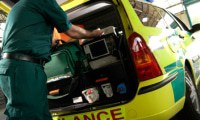
Paramedics work in ambulances or other emergency vehicles such as rapid response cars, motorcycles or helicopters.
Salary
Depending on experience, paramedics earn between £19,700 and £25,500 per year.
Team leaders earn up to £32,000 and more experienced paramedics, known as Emergency Care Practioners can earn as much as £37,000.
Responsibilities
Working as a paramedic is a varied and often unpredictable job, requiring paramedics to respond to a wide variety of emergency situations.
Broadly speaking their responsibilities include:
- Assessing the emergency situation
- Identifying the patient’s immediate needs
- Deciding on the action appropriate to the situation
- Administering basic and advanced life support techniques: CPR and defibrillation (electric shocks)
- Performing surgical procedures if required, most commonly intubation (inserting a tube down a patient’s throat to help them breathe)
- Keeping the patient’s airways open using specialist devices
- Medicating the patient and administering injections if required
- Administering intravenous fluid and drug therapy
- Dressing wounds
- Completing accurate patient records
- Ensuring all emergency equipment is in efficient working order
- Administering oxygen
Qualifications
Before paramedics can begin working they must be registered with the Health Professional Council.
To complete the registration process paramedics are required to complete an approved qualification and a period of specialist training with an ambulance service.
Paramedics can qualify by attaining a foundation degree or diploma through a higher education institution or through an on-the-job training scheme.
To train on the job paramedics must begin by working as an ambulance care assistant or (with relevant experience) as an ambulance technician during which time they will learn many of the skills necessary for the job.
After a period of time as an ambulance technician, trainees can then begin paramedic training with the Institute of Health Care Development.
This way of training was once the more popular route but it is gradually being phased out and not all ambulance services now offer paramedics the chance to work through the traditional technician route.
Instead, an increasing number of paramedics are completing their training through a university or college and there are now fifteen institutions offering approved paramedic qualifications across the UK.
To get on to a paramedic course trainees need a minimum of five GCSEs grades A – C and as many as three A levels (depending on the popularity of the course), with one A level in a life or natural science.
As well as attaining an approved qualification, paramedics must have their full B and C1 drivers’ licence which allows them to drive emergency vehicles.
Paramedics must also have full CRB clearance which means they are licensed to work with all sectors of the public.
Skills
Paramedics routinely deal with emergency situations so they must be able to work well under pressure and stay calm, regardless of the circumstance.
In addition they must have:
- A caring nature and a genuine desire to help those in need
- A wide range of practical skills
- A responsible attitude
- The ability to reassure patients and put them at ease
- The ability to use complex emergency and technical equipment
- A level-headed and logical approach to emergency situations
- The ability to think quickly and respond to emergencies as they arise
- The ability to communicate with people, regardless of their age, race or circumstance
- The ability to use initiative
- The ability to lead and manage small teams and to work effectively as part of a team
- A reasonable level of physical fitness
- Good health and adequate eyesight for driving (glasses are allowed)
- Emotional and mental stability
- Excellent communication skills, both written and verbal
- A respect for patient confidentiality
- The ability to drive safely under emergency conditions
- A flexible approach to the job
- The ability to use specialist computer systems
Working Conditions
Paramedics work under stressful and sometimes unpredictable circumstances, working with traumatised and sometimes aggressive members of the public.
The job can be emotionally and physically exhausting and involves dealing with trauma on a daily basis.
Like most medical roles, the job also requires paramedics to work shifts which means they must regularly work unsociable hours such as nights and weekends.
Experience
To qualify as a paramedic, trainees must complete a significant period of work experience with an ambulance service, which is tied into their degree, diploma or on-the-job scheme.
It may also be useful for potential trainees to gain relevant experience before they start training, in order to get on to an approved degree course.
This could include volunteering in a hospital, nursing home or other medical institution, shadowing a qualified paramedic or working with people in any other medical capacity.
Employers
Most paramedics work for the National Health Service (NHS) although there are some opportunities working for a private ambulance service or for the armed forces.
Other paramedics work in the community, with GPs and practice nurses, with specific surgeries or for a more specialist service such as the air ambulance crew.
Career Progression
Once a paramedic has at least three years’ experience they may apply to take on more responsibility as an Emergency Care Practitioner (ECP).
ECPs have more advanced training in diagnosis and medical care and usually work to treat complex injuries within the community.
In order to work as an ECP, paramedics must complete a further qualification such as a BSc Hons in Emergency Care.
Paramedics could also undertake further training to work for the air ambulance crew or other specialist area of the ambulance service.
Image
Also known as…
- Ambulance paramedic
Related Jobs
What’s it really like?
Hannah Stott is a Qualified Ambulance Technician and a trainee Paramedic who lives and works in Oxford.
She gives us the inside story …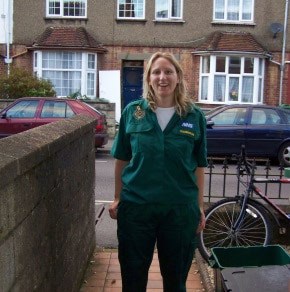
“I am 23 and have been working for the ambulance service for 2 years 4 months.
Before this I was a student studying for a midwifery degree.
In a typical day at work I drive ambulances and rapid response vehicles under emergency and non-emergency conditions (lights and sirens!)
I carry out routine medical jobs and give emergency aid to people in the community (often elderly people) as well as medical aid to callers to 999.
Working in this job, I love being out in the community and being invited into the homes of various people in their time of need.
I also enjoy the variety that is involved in the job.
On the downside I don’t really like the long hours and doing shift work (sometimes I feel like a hermit)
Anyone thinking of doing this job should think about it very seriously – it is nothing like Casualty!
Most of my job involves the elderly and routine medical tasks within the community.
Trauma is actually quite rare.
Being a paramedic is definitely a vocation and requires serious commitment.
Once I have completed my foundation degree (in two years time) I will hopefully qualify as a paramedic.
After that I will probably consider progressing to an ECP (Emergency Care Practitioner) if it fits in with my personal life.
In terms of other inside information, the jobs of ambulance technicians and paramedics are changing a lot at the moment with restructuring and new roles being created.
Research carefully and, if possible, get some work experience to see if the job is for you before you dive into it!
You also need to have your C1 driving license to join most trusts now – this can be expensive so is another consideration!”